Project at a Glance
Sq Ft Floor Abated
Air Clearance Result
Respirator Protection
Visual + Air Clearance
Executive Summary
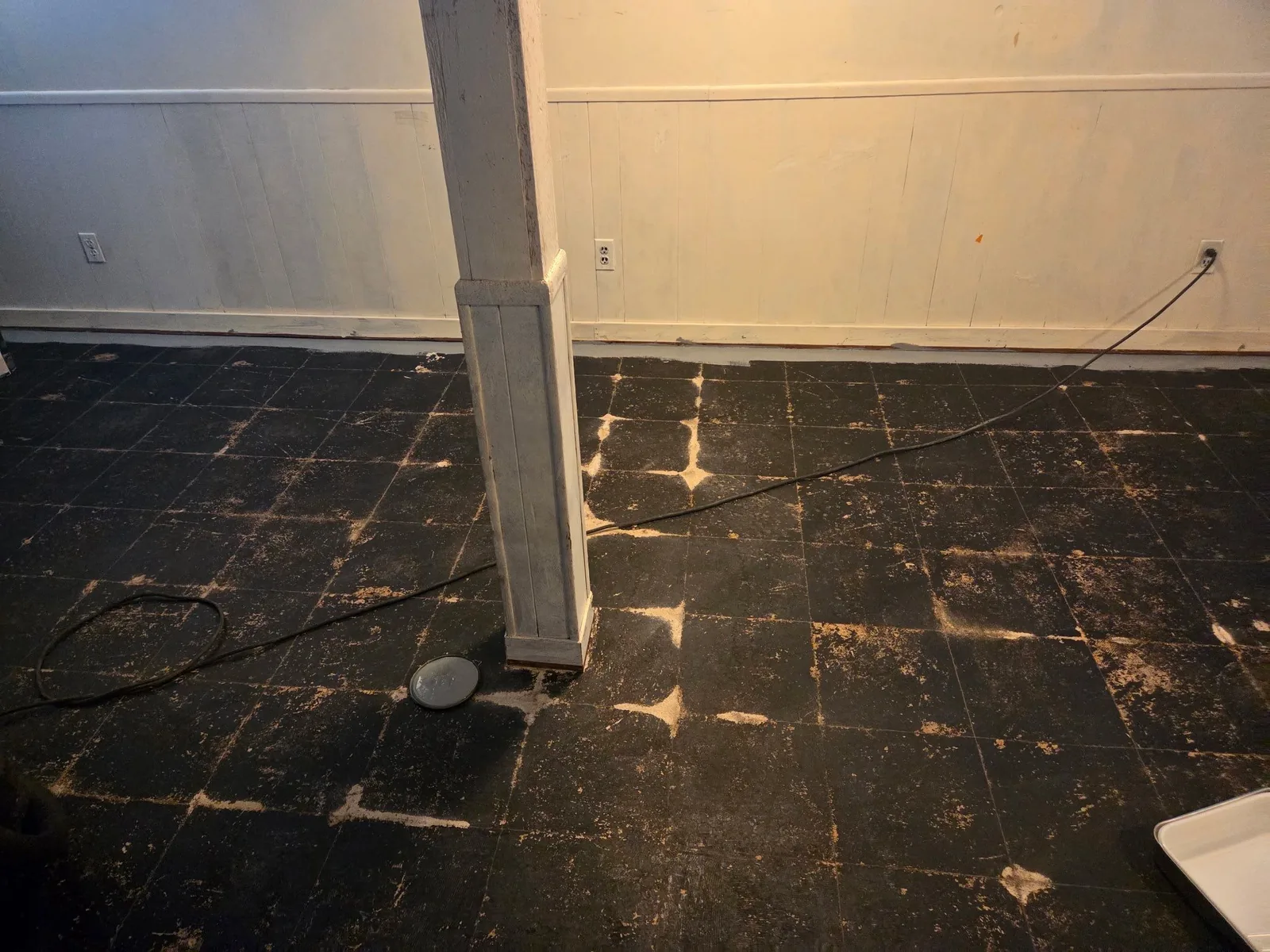
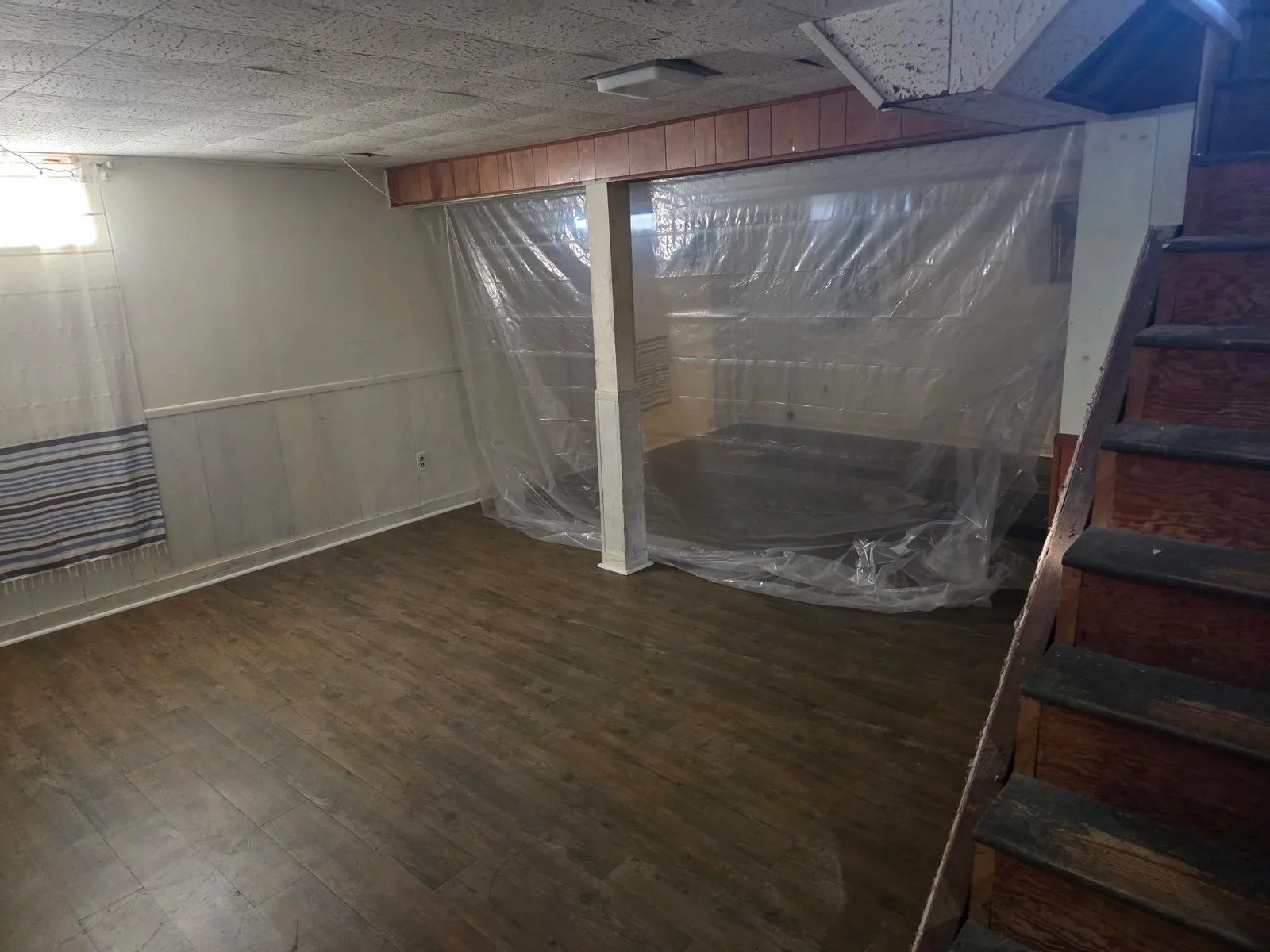
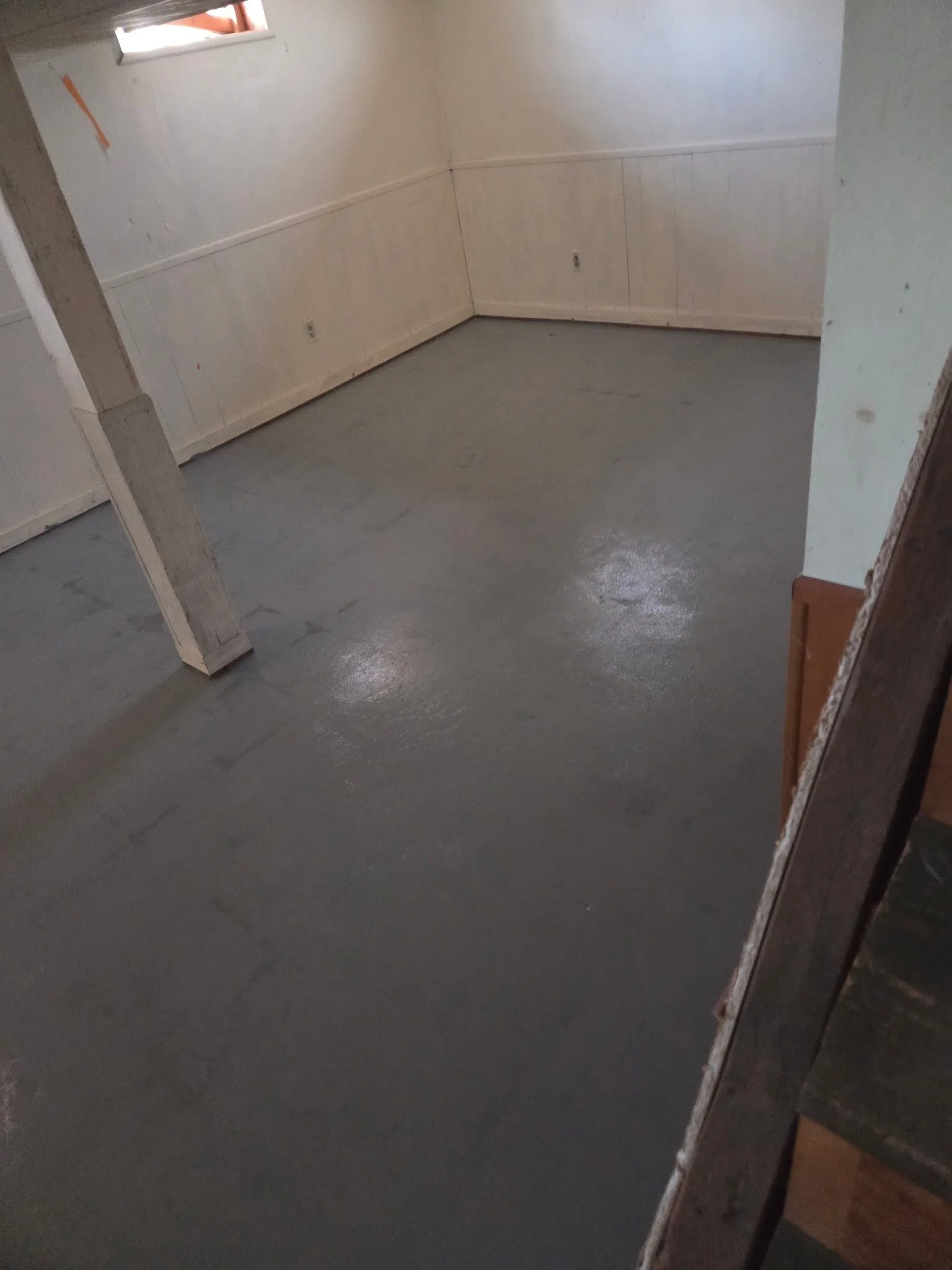
When a Linwood, New Jersey homeowner uncovered aging 9×9 floor tiles in their basement, our South Jersey abatement team confirmed the material was asbestos-containing and executed a controlled, three-day removal. Technicians built a sealed containment barrier, removed the tiles and the underlying black mastic under negative pressure, and finished the concrete subfloor with a tinted encapsulant that locks down any residual microscopic fibers.
The project passed both visual inspection and post-abatement air clearance, with airborne fiber levels confirmed below the regulated limit of 0.01 f/cc. The basement was returned safe for occupancy and ready for new, non-hazardous flooring — a clean, documented result delivered on a tight timeline.
Understanding the Hazard
The Material: Non-Friable Asbestos Floor Tile & Mastic
The basement flooring consisted of 9×9 vinyl-asbestos floor tiles set in a black asbestos-containing mastic — a common assembly in older homes. In their intact state these tiles are non-friable, meaning the asbestos fibers are bound in the material and not easily released. The danger arises during disturbance: cutting, scraping, breaking, or sanding can release respirable fibers into the air.
Because removal inherently disturbs the material, the work was treated as a full abatement under negative pressure — never a casual demolition. Roughly 450 square feet of basement flooring was affected.
“Intact asbestos tile isn’t the threat — disturbing it without containment is. The entire job is engineered to capture every fiber the moment a tile lifts.”
Site Assessment and Scope of Work
On assessment, technicians mapped the work zone, identified the tile and mastic assembly, and planned the containment build around the basement’s structural features. The footprint covered the full basement floor, bounded by perimeter walls, a central support column, and a low-clearance drop ceiling overhead.
| Zone | Condition Found | Action Taken |
|---|---|---|
| 9×9 floor tiles | Asbestos-containing, intact | Manual removal under negative pressure |
| Black mastic | Adhered to concrete | Specialized manual scraping |
| Concrete subfloor | Residual fibers possible | Tinted encapsulant applied |
| Work zone air | Disturbance hazard | HEPA negative-air containment |
Response Strategy
The abatement followed a strict, proven sequence: isolate the work zone behind an airtight barrier, remove the hazardous material under negative pressure, scrape the subfloor clean, encapsulate any residual fibers, and verify the result through independent clearance testing.
Working Around the Structure
The basement’s low-clearance drop ceiling and a central structural column complicated the containment build. Both required precise detailing of the 6-mil poly barrier to achieve a perfect airtight seal around obstructions. The black mastic added a second challenge — it had to be manually scraped from the concrete until the surface was smooth enough for a successful encapsulation finish.
Equipment Deployment Analysis
Asbestos abatement is an engineering-controls discipline: the right containment, air handling, and finishing tools — correctly deployed — are what make the work safe and verifiable.
HEPA Air Scrubber
A HEPA-filtered air scrubber maintained negative air pressure inside the containment, continuously filtering airborne particulates and ensuring contaminated air never escaped the work zone.
6-Mil Polyethylene Sheeting
Heavy-gauge poly sheeting formed the critical containment barrier, sealing the work zone off from the rest of the residence — including airtight detailing around the column and drop ceiling.
Floor Scrapers & Pry Bars
Manual scrapers and pry bars lifted the non-friable tiles intact and worked the stubborn black mastic off the concrete — avoiding power tools that would aerosolize fibers.
Airless Sprayer
An airless sprayer applied the tinted grey encapsulant in an even coat across the subfloor, sealing residual fibers and delivering a durable, paintable finish.
Air Clearance: Result vs. Regulated Limit
Post-abatement air samples confirmed airborne fiber levels below the regulated limit of 0.01 f/cc — the basement cleared for safe occupancy.
Abatement Timeline and Methodology
Why This Approach Worked
Engineering controls, properly executed: negative-air containment, full PPE, and manual removal kept every fiber inside the work zone and verified the result with independent clearance testing.
A finishing innovation: choosing a tinted grey encapsulant over a clear sealant locked down residual fibers while doubling as a durable, attractive floor coating — giving the homeowner a finished look and long-term safety in one step.
Asbestos Abatement Across South Jersey
Based in the region, Advanced DRI provides professional asbestos abatement throughout South Jersey — including Ocean, Monmouth, Burlington, Atlantic, and Cape May counties.
Why Professional Abatement Matters
Older homes across the Jersey Shore frequently contain asbestos floor tile, mastic, and other legacy materials. Disturbing them without proper containment and air handling can release respirable fibers throughout a home. Licensed abatement with negative-air containment and independent clearance testing is the only way to remove the hazard safely and prove the space is clean.
Key Takeaways
An asbestos floor in a Linwood basement was abated in three days with airtight containment, full PPE, manual removal, and a tinted encapsulant finish. Both visual inspection and air clearance passed — fiber levels below 0.01 f/cc — leaving a subfloor that is safe for occupancy and ready for new flooring.
Suspect asbestos in your home? Advanced DRI’s South Jersey team handles licensed abatement from containment to clearance. Call (732) 228-7582 for professional asbestos abatement in Linwood and the surrounding communities.